 Skip to content


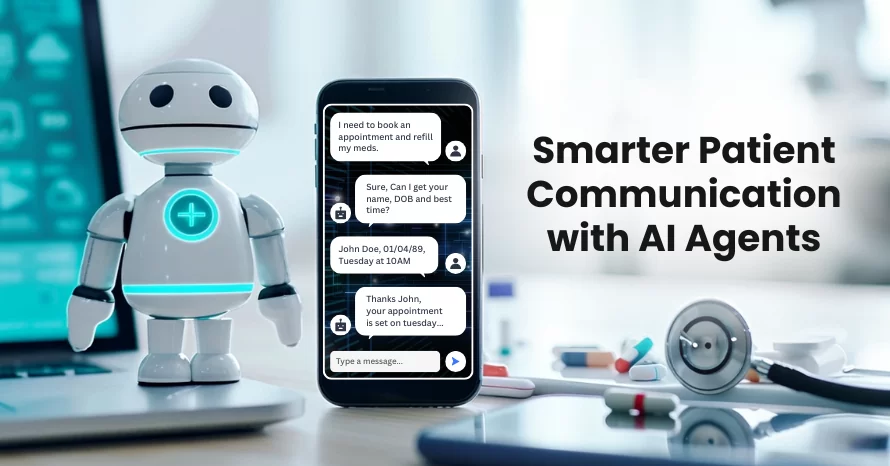
Healthcare and other high call volume organizations are under increasing pressure to deliver faster, more personalized patient communication while facing staff shortages, rising operational costs, and higher patient expectations. Traditional front desks and call centers are overwhelmed, leading to long wait times, missed calls, and frustrated patients.
As a result, healthcare, insurance, higher education chatbots, and AI communication platforms are quickly becoming a core part of modern healthcare operations. From appointment scheduling and billing questions to patient education and follow-ups, AI chatbots help providers improve efficiency, reduce costs, and increase patient satisfaction without adding strain on staff. We will focus on Healthcare as an example, but relatable to all organizations.
At a glance, AI chatbots help healthcare and other organizations:
- Reduce inbound call volume by handling routine patient inquiries
- Improve patient response times and satisfaction
- Lower operational and staffing costs
- Scale communication without adding headcount
What Is a Healthcare Chatbot?
A healthcare chatbot is an AI-powered conversational tool that communicates with patients via chat or voice. It uses natural language processing to understand patient intent and provide accurate, relevant responses in real time. In healthcare settings, chatbots must also meet strict security and compliance requirements, including HIPAA standards, to ensure patient data remains protected.
- Modern chatbots can:
- Answer patient questions 24/7
- Automate routine administrative tasks
- Integrate with scheduling and billing systems
- Escalate complex cases to human staff when needed
These capabilities make chatbots a powerful tool for AI automation in healthcare, especially for organizations looking to scale communication without increasing headcount.
Why Healthcare Communication Needs to Evolve
Healthcare communication has historically relied on phone calls and in-person interactions. However, call volumes continue to rise while staffing levels remain constrained.
According to the American Medical Association, physicians spend nearly two hours on administrative tasks for every hour of direct patient care.
At the same time, patients increasingly expect the same convenience they experience in retail or banking, such as instant responses, self-service options, and digital access to information. This growing mismatch between expectations and capacity is where AI healthcare communication delivers measurable value.
How AI Chatbots Save Time and Reduce Staff Burnout
One of the most immediate benefits of adopting a healthcare chatbot is the reduction in repetitive administrative work.
- AI chatbots can manage:
- Appointment scheduling and rescheduling
- Insurance and billing inquiries
- Office hours, locations, and directions
- Prescription refill requests
- Pre-visit instructions and post-care follow-ups
A McKinsey study found that up to 30 percent of healthcare administrative work could be automated using current technologies, significantly reducing staff workload.
By offloading these tasks, healthcare organizations allow employees to focus on patient care, thereby reducing burnout and improving operational efficiency.
Reducing Operational Costs and Improving Chatbot ROI
Call centers are expensive to scale. Hiring additional staff, training them, and managing overtime quickly drives up operational costs.
AI-driven call center automation offers a cost-effective alternative. According to IBM, businesses using AI chatbots can reduce customer service costs by up to 30 percent.
In healthcare specifically, chatbots help reduce inbound call volume, shorten resolution times, and minimize escalations. These efficiencies contribute to a strong chatbot ROI, often realized within the first few months of implementation.
Improving Patient Engagement and Satisfaction
Patient satisfaction is closely tied to response time and clarity of communication. Long wait times and missed calls negatively impact trust and experience.
- AI chatbots improve patient engagement by:
- Providing instant responses, 24/7
- Supporting multilingual communication
- Delivering consistent and accurate information
- Sending automated reminders for appointments and medications
Research published by Accenture found that 64 percent of patients are open to using AI for basic healthcare interactions, especially for scheduling and reminders.
These improvements directly contribute to higher patient satisfaction and better retention.
Real-World Use Cases of AI Chatbots in Healthcare
AI chatbots are already delivering measurable impact across healthcare settings:
- Urgent care centers use chatbots for symptom triage and care guidance
- Hospitals automate scheduling, discharge instructions, and patient surveys
- Specialty clinics streamline pre-screening and intake processes
- Revenue cycle teams handle billing inquiries and payment reminders
Advanced chatbot platforms can also integrate with medical records indexing and data automation, enabling faster access to patient information and reducing manual documentation.
Supporting Front-Desk and Call Center Operations
Front desks and call centers often experience peak-hour overloads. AI chatbots act as a virtual first line of communication, handling thousands of simultaneous conversations.
For smaller practices, chatbots can manage most front-desk inquiries entirely. For larger organizations, they serve as an intelligent filter, escalating only complex issues to human agents. This hybrid approach improves response times while optimizing staff utilization.
Tronitech’s Role in AI Automation for Healthcare
Tronitech’s AI Chatbot & Voice Assistant platform is designed specifically to address healthcare communication challenges.
By combining conversational AI, voice automation, and system integration, Tronitech helps healthcare organizations:
- Automate patient communication
- Reduce call center and front-desk workload
- Improve operational efficiency
- Enhance patient satisfaction
Tronitech’s expertise in AI automation in healthcare allows providers to modernize communication without disrupting existing workflows.
Evidence That AI Chatbots Deliver Results
Multiple studies reinforce the effectiveness of AI chatbots in healthcare:
- Chatbots can reduce appointment no-shows by 20 to 25 percent
- Faster response times improve patient satisfaction and engagement.
These outcomes highlight why AI chatbots are becoming a standard component of healthcare communication strategies.
The Future of AI Healthcare Communication
As patient volumes increase and expectations evolve, healthcare organizations need scalable, intelligent solutions. AI chatbots provide a future-ready approach that supports growth while controlling costs.
Organizations that adopt AI-driven communication now position themselves for long-term efficiency, improved patient/customer relationships, and competitive advantage.
Conclusion: Why Now Is the Right Time to Adopt AI Chatbots
Healthcare and other industry chatbots deliver clear benefits, including time savings, reduced operational costs, improved patient/customer engagement, and higher satisfaction. By automating routine communication and supporting front-desk and call center workflows, AI chatbots allow healthcare/other FTE teams to focus on patient care.
Ready to Transform Your Healthcare Communication?
Discover how Tronitech’s AI Chatbot & Voice Assistant solutions help healthcare and other organizations reduce call volume, improve patient/customer satisfaction, and scale efficiently.
Schedule a demo today to see how AI-driven automation can transform your patient/customer communication strategy.
